Luxury Safari in Kenya
Written from Nairobi, Kenya · By the Vard Africa Team · 2026
From the Maasai Mara at dawn to a private camp under the stars — Vard Africa’s complete guide to planning a luxury safari in Kenya. Written by specialists on the ground in Nairobi.
For the traveller who has been everywhere and is finally ready for the one place that changes everything.
Nobody warns you about the silence.
You expect the wildebeest. You expect the lions. You expect the vast, cinematic sweep of the Maasai Mara that you have seen on every nature documentary since childhood. What nobody tells you what cannot be told, only experienced is the quality of the silence that lives between all of it.
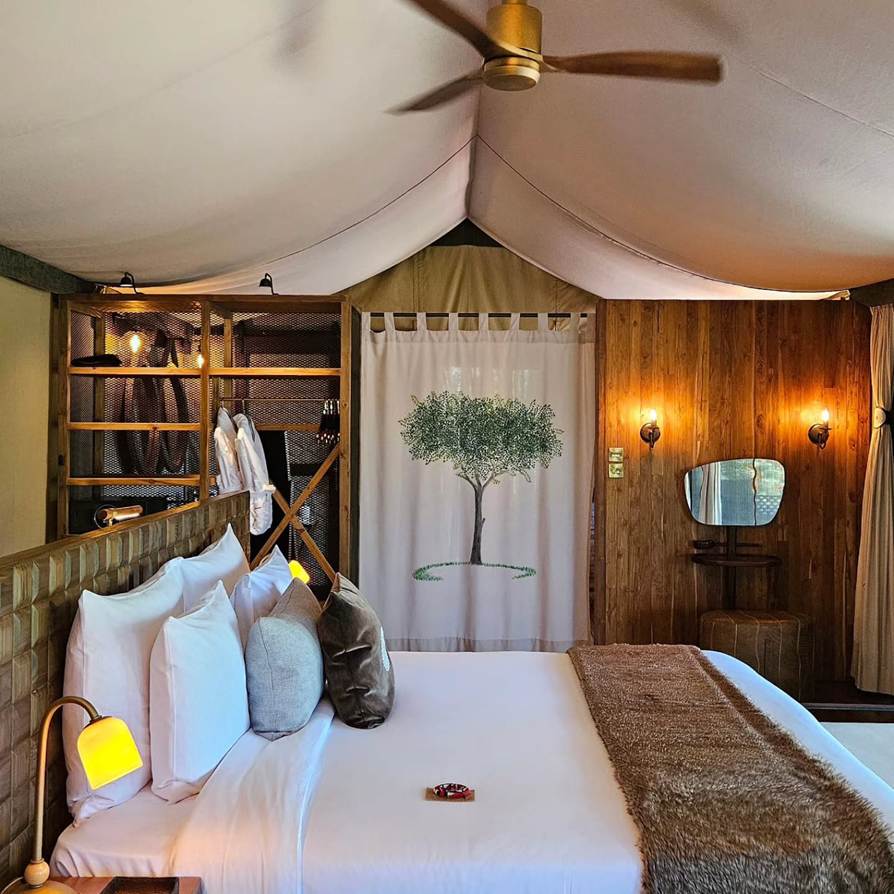
It settles over you somewhere on the second morning. The camp has not yet woken. The canvas of your tent breathes gently in the pre-dawn chill. And outside, perhaps twenty metres away, the bush makes its own quiet sounds a rustle, a low rumble, a shift in the grass that tells you something enormous is close. You lie still. You do not reach for your phone. For the first time in longer than you can remember, you simply exist completely, unhurriedly present.
This is what a luxury safari in Kenya does to people. Not the photographs, not the game drives, not even the extraordinary camps where every detail has been considered and reconsidered with obsessive care. It is the silence. And the version of yourself you find inside it.
At Vard Africa, we have been building these moments for discerning travellers from across the world. We are based in Nairobi not London, not New York, not behind a screen somewhere translating brochures into itineraries. We are here, on the ground, with relationships built over years with the finest camps, the most gifted guides, and the hidden corners of this country that never appear on any map.
This guide is written from the inside. Not as a sales document, but as a genuine, honest, deeply personal account of what a luxury safari in Kenya truly is and how, if you approach it correctly, it will become one of the most significant experiences of your life.

Kenya is not a destination you visit. It is a place you are changed by. Every guest who has ever sat with us in this country has gone home carrying something they did not arrive with and they are never quite sure how to explain it to people who have not been.
Why Kenya — and Why No Other Country Quite Compares
Travellers who have been on safari in Tanzania, South Africa, Botswana extraordinary countries, every one often ask us what makes Kenya different. The question deserves a serious answer.
Kenya is where the modern concept of safari was born. The word itself Swahili for journey carries in its syllables the long history of this land and the relationship between its people and its wildlife that has sustained both for centuries. But Kenya is not trading on history. It is building, right now, some of the most forward-thinking and genuinely thrilling luxury experiences available anywhere in the world.
The Maasai Mara alone 1,510 square kilometres of open savannah in Kenya’s south-west hosts the highest density of predators on the African continent. Lions, leopards, cheetahs, hyenas, wild dogs. All of them operating in a landscape so open, so unenclosed, that game viewing here has a quality of theatre that no other park can match.
But what truly separates Kenya, for the guest who values privacy and depth above all else, is the private conservancy system that has grown around the national reserve. In Olare Motorogi, Naboisho, Ol Kinyei, and Mara North, private camps operate on vast tracts of community-owned land under strict low-density agreements. The result is a safari experience where you may spend an entire morning with a lion pride and never see another vehicle. Where your guide can take you off-road. Where the Mara feels, genuinely, like it belongs to you.

| “I have been guiding in the Mara for nineteen years. There are mornings out there when the light is low and the grass is wet and a leopard walks past the vehicle without even glancing at you when I feel it for the first time all over again. That is what Kenya does. It never gets ordinary.” — Joseph Kamau · Senior Safari Guide — Maasai Mara |
Beyond the Mara, Kenya offers a collection of ecosystems so varied, so dramatically different from one another, that a single itinerary can move a guest through landscapes that feel like different continents entirely.
- Amboseli — where elephant herds move across the plains beneath the snow peak of Kilimanjaro in a scene so beautiful it feels almost constructed
- Laikipia Plateau — a vast network of private conservancies that shelters critically endangered species and offers a depth of wilderness experience the national parks cannot provide
- Samburu — the wild, arid north, where species exist that are found nowhere else on earth and the cultural encounter with the Samburu people carries a weight that stays with guests long after they have returned home
- The Rift Valley — ancient, volcanic, bird-rich, and hauntingly beautiful in a way that reminds you this landscape is measured in millions of years, not decades.
| A FRIEND’S STORY “We had been to the Maldives, to Bali, to the Amalfi Coast. We thought we knew what luxury travel felt like. Kenya was something entirely different. On the third morning our guide stopped the vehicle and turned off the engine and we sat for forty-five minutes watching a cheetah teach her cubs to stalk. Nobody spoke. My wife reached for my hand. When we finally drove back to camp neither of us could find the right words. We still haven’t, really.” — Mr Anil from London, travelling with Vard Africa. |
The Great Migration — Understanding Nature’s Most Extraordinary Event
There is a moment during a river crossing when time seems to stop.
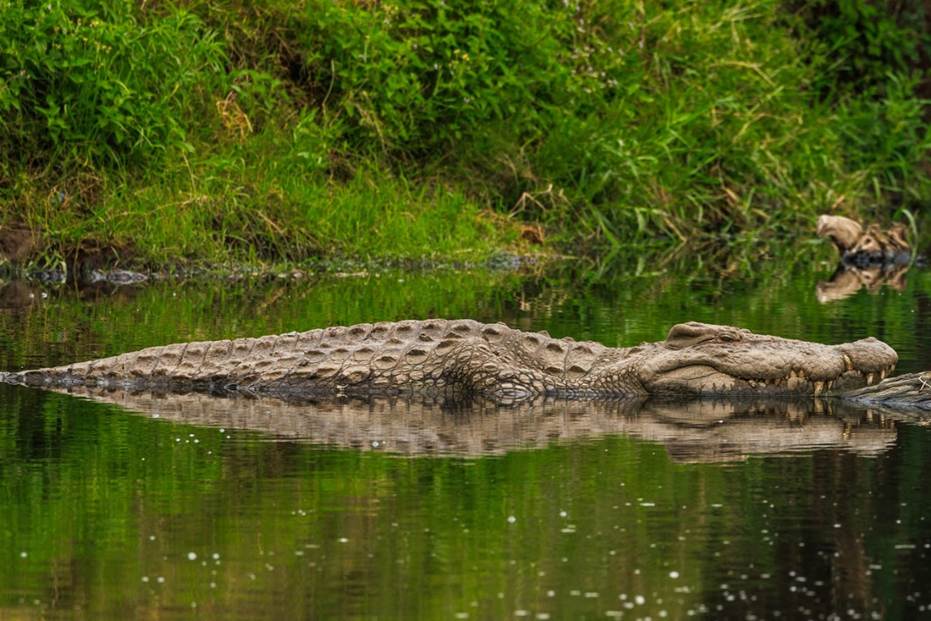
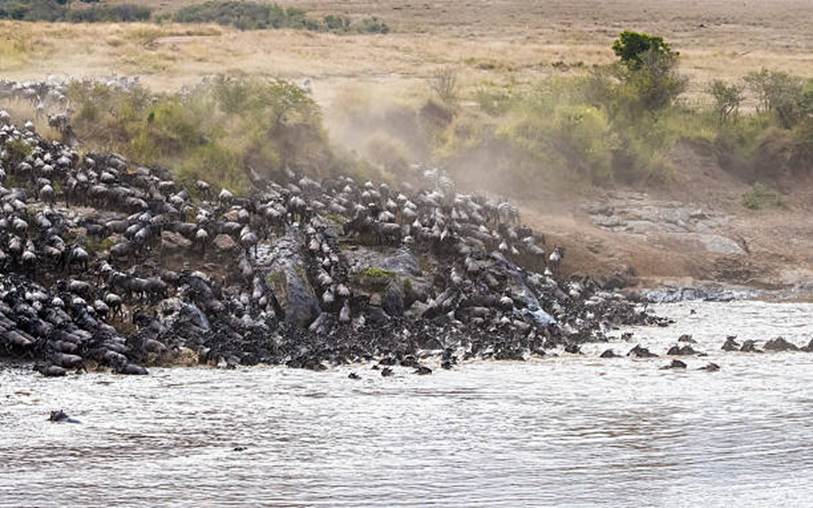
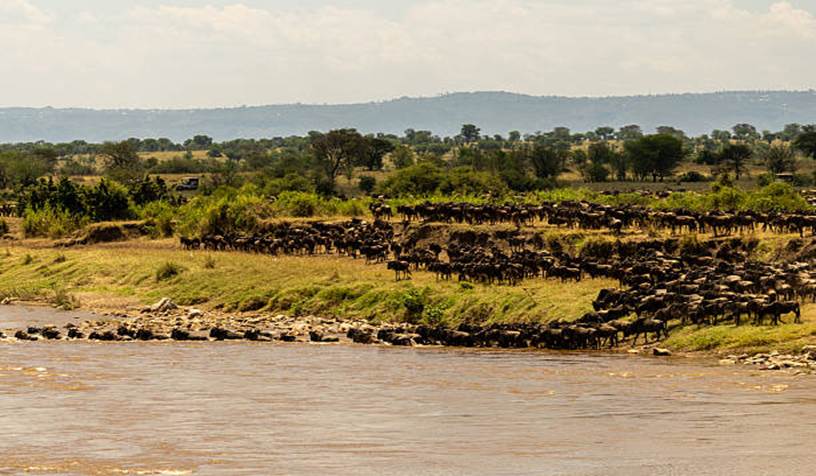
The wildebeest have gathered on the far bank for hours sometimes days working up to a decision that none of them seems willing to make first. The Mara River runs brown and fast below. Crocodiles, ancient and utterly patient, hold their positions just beneath the surface. And then, without warning, one animal goes and within seconds the bank erupts into a churning, thundering, extraordinary cascade of bodies and sound and spray that takes your breath away entirely.
Over two million wildebeest, zebra and gazelle complete this cycle every year following the rains in a continuous loop between Tanzania’s Serengeti and Kenya’s Maasai Mara. It is the largest land migration on earth. It has been happening, in roughly the same way, for longer than human beings have been recording time.
And the most extraordinary part? It is completely unpredictable. The crossings happen on the wildebeest’s own schedule, not ours. This is precisely why the intelligence of a ground-based team like Vard Africa with direct daily contact with camp managers and guides who are tracking herd movements in real time is not a luxury. It is the difference between witnessing a crossing and missing one entirely.

When to come — and what nobody else will tell you
The migration is in Kenya’s Maasai Mara from approximately July through to October. But within that window, each month has its own character:
- July — The herds arrive. The first crossings are electric with unpredictability. The Mara is lush and green and extraordinarily dramatic.
- August — Peak season for crossings. Also peak season for visitors. Go private conservancy and the crowds become irrelevant.
- September — Our personal favourite month. The crossings are frequent. The light is extraordinary. And the Mara begins to thin of tourists even as the wildlife density remains at its highest.
- October — The herds are beginning to move south again. Visitor numbers drop dramatically. The camp rates come down. The experience, paradoxically, becomes even more intimate.
What the brochures do not tell you: a crossing can last forty seconds or four hours. The wildebeest will approach the bank and turn back — sometimes repeatedly — before committing. The waiting is its own experience. Sit with your guide, a cold drink in hand, the sun moving across the sky, and understand that this is a world that has been operating entirely without your input for an eternity. The patience it asks of you is, itself, the gift.
Guests who come to Kenya expecting a schedule always leave having surrendered one. And they always tell us it was the best thing that happened to them.
The Camps — What Ultra-Luxury in the Bush Actually Means
We want to be precise about something, because it matters enormously in this market.
There are thousands of camps and lodges across Kenya. Many of them are beautiful. Some of them are genuinely extraordinary. A very small number of them are the kind of places that redefine your understanding of what hospitality is capable of.
At Vard Africa we work exclusively with that last category. Not because we are being precious about it but because our guests come to Kenya once, perhaps twice in a lifetime. The camp they sleep in, the guide who sits beside them, the meals they eat under the stars these are not incidental details. They are the entire experience.
What separates a truly exceptional camp from merely a good one:
After years of working with the finest properties in Kenya, we have found that the markers of genuine excellence are rarely the ones that appear in brochures. It is almost never about the infinity pool or the thread count of the linen though those things matter. It is about the less visible architecture of the experience:
- The camp manager who has read your pre-arrival form and greets you by name with a drink that is already your favourite
- The guide who has been working this specific conservancy for fifteen years and knows, by the way the long grass moves, that there is a leopard waiting forty metres to the left
- The chef who asks, quietly, on the first evening, whether you would prefer your bush dinner on the riverbank or under the fig tree — and who has already prepared both options
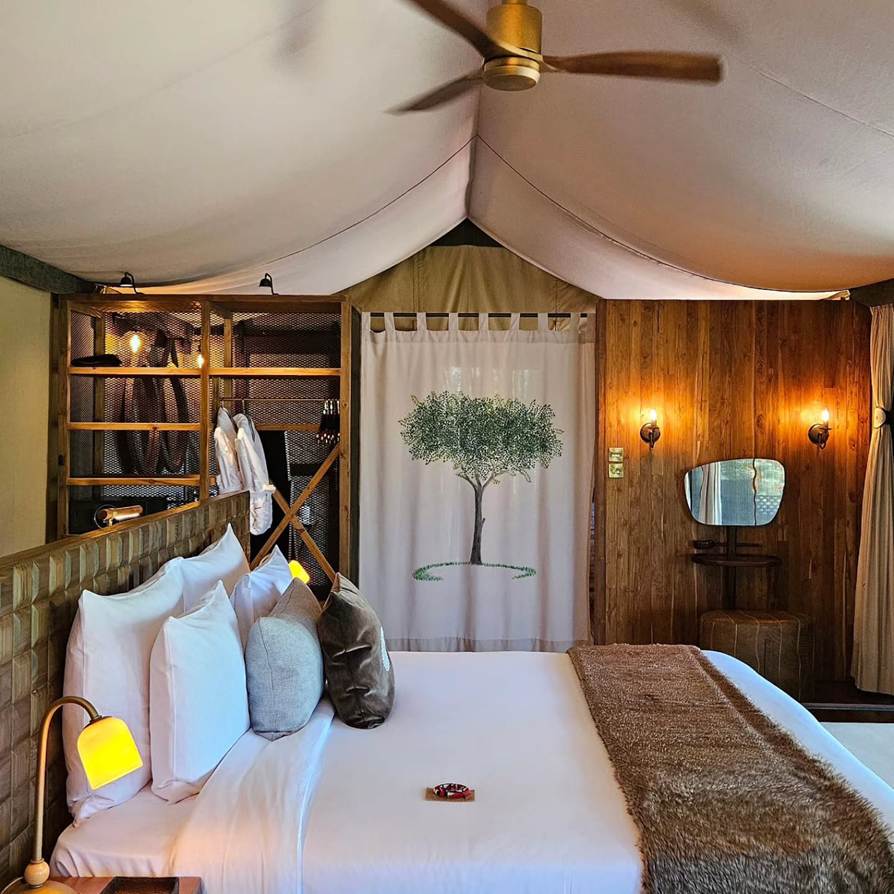
- The camp that has already positioned your bed to face the direction where the hyenas call at 2am, because a previous guest mentioned it once and it was noted.
This level of attentiveness cannot be manufactured for a brochure. It is either present in the culture of a camp or it is not. We know, from direct experience, which camps have it and those are the only ones that appear in a Vard Africa itinerary.
| “When I put together a camp selection for a guest, I am not looking at star ratings or room categories. I am asking myself one question: if this were my parent travelling, would I put them here? If the answer is anything less than an immediate yes, the property does not make the list.” — Amara Wanjiru · Vard Africa — Guest relations, Nairobi |
The Experiences — Beyond the Game Drive
The game drive is the heartbeat of a Kenya safari. But the finest itineraries we build at Vard Africa treat the game drive as the foundation and then build an architecture of experience around it that turns a beautiful trip into something genuinely unforgettable.
Hot Air Balloon Over the Mara
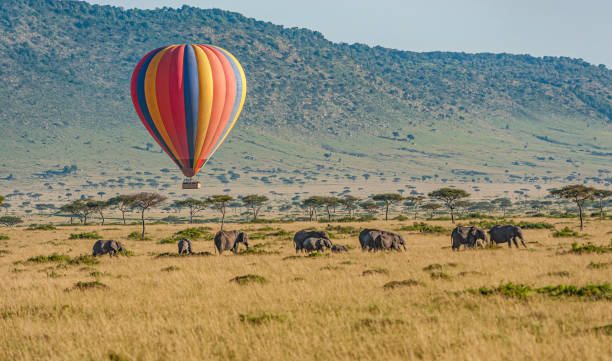
At 5:30am, in the dark, a vehicle takes you out to the launch site. The balloon inflates slowly in the torchlight. And then, as the sun begins its first movement above the horizon, you rise silently, without vibration above the Mara. Below you the herds are moving in the early light. The river catches the first gold of the day. The camp you slept in last night is a tiny collection of canvas in an ocean of grass. Nothing in your life has quite prepared you for this. Nothing will.

A Private Bush Dinner:
The camp team has spent the afternoon setting a table in a clearing you passed on this morning’s drive. White linen. Crystal. Candles that burn without a flicker in the still evening air. Your guide sits with you through the meal, telling you the history of the Mara the ecology, the people, the seasons in the way that only someone who has spent a life here can. The only sound is the bush settling into night around you. This is one of those evenings that, years later, people still describe as the best of their lives.
A Walking Safari:
To be on foot in the African bush is to experience an immediate and profound shift in your relationship with the landscape. The hierarchy changes. You are not above the grass in a vehicle you are in it, at the same level as everything that lives here. Your senses sharpen instinctively. The guide moves ahead of you, reading the ground, and every footstep becomes a kind of conversation with the land. It is not for everyone. For those it is for, it is transformative.
A Sundowner in the Wild:
There is a specific quality to the light in Kenya in the hour before dusk. The gold deepens to amber, the shadows stretch long across the grass, and the air carries a warmth that feels almost personal. Your guide finds the right kopje a granite outcrop with an unbroken view across the plains and the camp team is already there, drinks poured, the Mara laid out below you. Nobody speaks for a while. Nobody needs to.
A great safari is not a list of animals seen. It is a collection of moments when the world reminded you of its scale and you felt, briefly and beautifully, exactly the right size within it.
How to Plan Your Kenya Safari — The Vard Africa Way:
We are going to be honest with you about the planning process, because we think honesty is the most useful thing we can offer.
A luxury Kenya safari, properly done, is not a complicated thing to plan but it is a precise one. The right combination of timing, destination, camp, and guide is what transforms a good trip into an extraordinary one. And those combinations are not obvious from the outside. They require current, ground-level knowledge that changes with the seasons, with conservation conditions, with the movements of specific wildlife populations.
This is precisely what Vard Africa exists to provide.
Step One — Begin with the question nobody asks:
Most guests begin their enquiry by asking about destinations or camps. We always begin one step earlier: we ask who you are as a traveller. Not what you want to see but how you want to feel. What does the ideal morning look like? What does the ideal evening look like? What do you need from this trip that your ordinary life is not giving you?
The answers to those questions build a more precise and personal itinerary than any camp shortlist ever could.
Step Two — Choose your timing with intention:
Kenya rewards every season with something extraordinary, but no two months are alike. We help you match your travel dates to the specific experience that speaks to you whether that is the drama of the migration, the intimacy of the low season, the newborn wildlife of the green months, or the clarity and stillness of the dry-season mornings.
Step Three — Trust someone who is actually there:
We say this not to promote ourselves but because it is simply true: the difference between an operator in London booking Kenya from a screen and a team in Nairobi with direct relationships on the ground is the difference between a well-organised trip and a genuinely life-changing one.
We know which guide at a specific camp had a leopard with cubs on his traversing area last week. We know that the northern section of a particular conservancy has been extraordinary this month. We know that the camp that looks perfect on paper has been having kitchen issues, and we have already taken it off our recommended list until we are satisfied it has been resolved.
Step Four — Leave space for the unexpected:
The most transformative moments on a Kenya safari are never the ones you planned for. They are the elephant herd that appears at the waterhole as you are heading back to camp. The night sky on a clear Mara evening that stops you mid-sentence. The way your guide says, very quietly, ‘don’t move’ and you understand, for the first time, what it means to be truly present somewhere.
What You Need to Know Before You Go:
Getting to Kenya:
Nairobi’s Jomo Kenyatta International Airport receives direct flights from London, Amsterdam, Dubai, Doha, and multiple African hubs. From Nairobi, the journey to your camp is via private charter bush flight a 40-minute experience over the Rift Valley that is itself among the most beautiful things you will do in Kenya. Wilson Airport, a smaller general aviation facility in Nairobi, is the departure point for most bush flights and we arrange every connection personally.
Visa and Entry Requirements:
Most international visitors require a Kenya Electronic Travel Authorisation (ETA), applied for online before departure. Vard Africa manages this process for all our guests as part of our full pre-arrival service. We also advise on any additional documentation required for Tanzania, Rwanda, or other East African destinations if your itinerary extends beyond Kenya.
Health and Wellbeing:
We recommend a consultation with your travel health physician at least six weeks before departure. Malaria prophylaxis is advised for most safari regions. Yellow fever vaccination may be required depending on your country of origin and routing. All our partner camps maintain the highest standards of hygiene and have access to emergency medical support and evacuation services.
The best time to visit:
The honest answer is that there is no bad time to visit Kenya only different Kenyas to visit at different times of year. We will help you find the one that is right for you specifically.

A Final Word:
Every safari we build at Vard Africa begins with a conversation and ends, weeks or months later, with a guest standing at an airport trying to find the words to describe what happened to them in the bush. They rarely fully succeed. Not because the experience was indescribable but because the person who went in is not quite the same as the person standing there now.
Kenya does this. Quietly, unhurriedly, without ceremony. It simply shows you a version of the world that is so vast and so indifferent to ordinary human concerns that something in you recalibrates permanently.
We would very much like to be the team that takes you there.
The Maasai have a word — sopa — a greeting that means, roughly, ‘I see you.’ After a week in the Mara, guests often tell us they finally understand what it feels like to be truly seen by a landscape, by a people, by a silence that has been here long before any of us and will be here long after.
| Tell us what you dream of and we will show you exactly how to make it real. ENQUIRE NOW |
For the traveller who has been everywhere and is finally ready for the one place that changes everything.
Nobody warns you about the silence.
You expect the wildebeest. You expect the lions. You expect the vast, cinematic sweep of the Maasai Mara that you have seen on every nature documentary since childhood. What nobody tells you what cannot be told, only experienced is the quality of the silence that lives between all of it.
It settles over you somewhere on the second morning. The camp has not yet woken. The canvas of your tent breathes gently in the pre-dawn chill. And outside, perhaps twenty metres away, the bush makes its own quiet sounds a rustle, a low rumble, a shift in the grass that tells you something enormous is close. You lie still. You do not reach for your phone. For the first time in longer than you can remember, you simply exist completely, unhurriedly present.
This is what a luxury safari in Kenya does to people. Not the photographs, not the game drives, not even the extraordinary camps where every detail has been considered and reconsidered with obsessive care. It is the silence. And the version of yourself you find inside it.
At Vard Africa, we have been building these moments for discerning travellers from across the world. We are based in Nairobi not London, not New York, not behind a screen somewhere translating brochures into itineraries. We are here, on the ground, with relationships built over years with the finest camps, the most gifted guides, and the hidden corners of this country that never appear on any map.
This guide is written from the inside. Not as a sales document, but as a genuine, honest, deeply personal account of what a luxury safari in Kenya truly is and how, if you approach it correctly, it will become one of the most significant experiences of your life.

Kenya is not a destination you visit. It is a place you are changed by. Every guest who has ever sat with us in this country has gone home carrying something they did not arrive with and they are never quite sure how to explain it to people who have not been.
Why Kenya — and Why No Other Country Quite Compares
Travellers who have been on safari in Tanzania, South Africa, Botswana extraordinary countries, every one often ask us what makes Kenya different. The question deserves a serious answer.
Kenya is where the modern concept of safari was born. The word itself Swahili for journey carries in its syllables the long history of this land and the relationship between its people and its wildlife that has sustained both for centuries. But Kenya is not trading on history. It is building, right now, some of the most forward-thinking and genuinely thrilling luxury experiences available anywhere in the world.
The Maasai Mara alone 1,510 square kilometres of open savannah in Kenya’s south-west hosts the highest density of predators on the African continent. Lions, leopards, cheetahs, hyenas, wild dogs. All of them operating in a landscape so open, so unenclosed, that game viewing here has a quality of theatre that no other park can match.
But what truly separates Kenya, for the guest who values privacy and depth above all else, is the private conservancy system that has grown around the national reserve. In Olare Motorogi, Naboisho, Ol Kinyei, and Mara North, private camps operate on vast tracts of community-owned land under strict low-density agreements. The result is a safari experience where you may spend an entire morning with a lion pride and never see another vehicle. Where your guide can take you off-road. Where the Mara feels, genuinely, like it belongs to you.
| “I have been guiding in the Mara for nineteen years. There are mornings out there when the light is low and the grass is wet and a leopard walks past the vehicle without even glancing at you when I feel it for the first time all over again. That is what Kenya does. It never gets ordinary.” — Joseph Kamau · Senior Safari Guide — Maasai Mara |
Beyond the Mara, Kenya offers a collection of ecosystems so varied, so dramatically different from one another, that a single itinerary can move a guest through landscapes that feel like different continents entirely.
- Amboseli — where elephant herds move across the plains beneath the snow peak of Kilimanjaro in a scene so beautiful it feels almost constructed
- Laikipia Plateau — a vast network of private conservancies that shelters critically endangered species and offers a depth of wilderness experience the national parks cannot provide
- Samburu — the wild, arid north, where species exist that are found nowhere else on earth and the cultural encounter with the Samburu people carries a weight that stays with guests long after they have returned home
- The Rift Valley — ancient, volcanic, bird-rich, and hauntingly beautiful in a way that reminds you this landscape is measured in millions of years, not decades.
| A FRIEND’S STORY “We had been to the Maldives, to Bali, to the Amalfi Coast. We thought we knew what luxury travel felt like. Kenya was something entirely different. On the third morning our guide stopped the vehicle and turned off the engine and we sat for forty-five minutes watching a cheetah teach her cubs to stalk. Nobody spoke. My wife reached for my hand. When we finally drove back to camp neither of us could find the right words. We still haven’t, really.” — Mr Anil from London, travelling with Vard Africa. |
The Great Migration — Understanding Nature’s Most Extraordinary Event
There is a moment during a river crossing when time seems to stop.
The wildebeest have gathered on the far bank for hours sometimes days working up to a decision that none of them seems willing to make first. The Mara River runs brown and fast below. Crocodiles, ancient and utterly patient, hold their positions just beneath the surface. And then, without warning, one animal goes and within seconds the bank erupts into a churning, thundering, extraordinary cascade of bodies and sound and spray that takes your breath away entirely.
Over two million wildebeest, zebra and gazelle complete this cycle every year following the rains in a continuous loop between Tanzania’s Serengeti and Kenya’s Maasai Mara. It is the largest land migration on earth. It has been happening, in roughly the same way, for longer than human beings have been recording time.
And the most extraordinary part? It is completely unpredictable. The crossings happen on the wildebeest’s own schedule, not ours. This is precisely why the intelligence of a ground-based team like Vard Africa with direct daily contact with camp managers and guides who are tracking herd movements in real time is not a luxury. It is the difference between witnessing a crossing and missing one entirely.
When to come — and what nobody else will tell you
The migration is in Kenya’s Maasai Mara from approximately July through to October. But within that window, each month has its own character:
- July — The herds arrive. The first crossings are electric with unpredictability. The Mara is lush and green and extraordinarily dramatic.
- August — Peak season for crossings. Also peak season for visitors. Go private conservancy and the crowds become irrelevant.
- September — Our personal favourite month. The crossings are frequent. The light is extraordinary. And the Mara begins to thin of tourists even as the wildlife density remains at its highest.
- October — The herds are beginning to move south again. Visitor numbers drop dramatically. The camp rates come down. The experience, paradoxically, becomes even more intimate.
What the brochures do not tell you: a crossing can last forty seconds or four hours. The wildebeest will approach the bank and turn back — sometimes repeatedly — before committing. The waiting is its own experience. Sit with your guide, a cold drink in hand, the sun moving across the sky, and understand that this is a world that has been operating entirely without your input for an eternity. The patience it asks of you is, itself, the gift.
Guests who come to Kenya expecting a schedule always leave having surrendered one. And they always tell us it was the best thing that happened to them.

The Camps — What Ultra-Luxury in the Bush Actually Means
We want to be precise about something, because it matters enormously in this market.
There are thousands of camps and lodges across Kenya. Many of them are beautiful. Some of them are genuinely extraordinary. A very small number of them are the kind of places that redefine your understanding of what hospitality is capable of.
At Vard Africa we work exclusively with that last category. Not because we are being precious about it but because our guests come to Kenya once, perhaps twice in a lifetime. The camp they sleep in, the guide who sits beside them, the meals they eat under the stars these are not incidental details. They are the entire experience.
What separates a truly exceptional camp from merely a good one:
After years of working with the finest properties in Kenya, we have found that the markers of genuine excellence are rarely the ones that appear in brochures. It is almost never about the infinity pool or the thread count of the linen though those things matter. It is about the less visible architecture of the experience:
- The camp manager who has read your pre-arrival form and greets you by name with a drink that is already your favourite
- The guide who has been working this specific conservancy for fifteen years and knows, by the way the long grass moves, that there is a leopard waiting forty metres to the left
- The chef who asks, quietly, on the first evening, whether you would prefer your bush dinner on the riverbank or under the fig tree — and who has already prepared both options
- The camp that has already positioned your bed to face the direction where the hyenas call at 2am, because a previous guest mentioned it once and it was noted.
This level of attentiveness cannot be manufactured for a brochure. It is either present in the culture of a camp or it is not. We know, from direct experience, which camps have it and those are the only ones that appear in a Vard Africa itinerary.
| “When I put together a camp selection for a guest, I am not looking at star ratings or room categories. I am asking myself one question: if this were my parent travelling, would I put them here? If the answer is anything less than an immediate yes, the property does not make the list.” — Amara Wanjiru · Vard Africa — Guest relations, Nairobi |
The Experiences — Beyond the Game Drive
The game drive is the heartbeat of a Kenya safari. But the finest itineraries we build at Vard Africa treat the game drive as the foundation and then build an architecture of experience around it that turns a beautiful trip into something genuinely unforgettable.
Hot Air Balloon Over the Mara
At 5:30am, in the dark, a vehicle takes you out to the launch site. The balloon inflates slowly in the torchlight. And then, as the sun begins its first movement above the horizon, you rise silently, without vibration above the Mara. Below you the herds are moving in the early light. The river catches the first gold of the day. The camp you slept in last night is a tiny collection of canvas in an ocean of grass. Nothing in your life has quite prepared you for this. Nothing will.
A Private Bush Dinner:
The camp team has spent the afternoon setting a table in a clearing you passed on this morning’s drive. White linen. Crystal. Candles that burn without a flicker in the still evening air. Your guide sits with you through the meal, telling you the history of the Mara the ecology, the people, the seasons in the way that only someone who has spent a life here can. The only sound is the bush settling into night around you. This is one of those evenings that, years later, people still describe as the best of their lives.
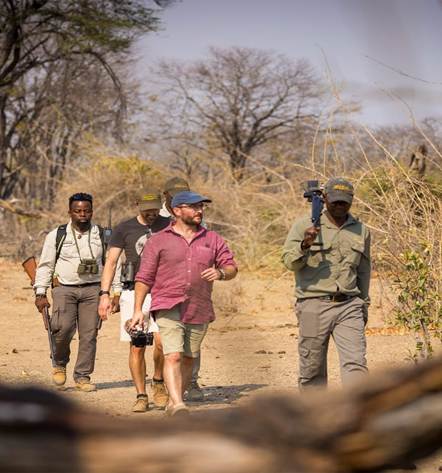
A Walking Safari:
To be on foot in the African bush is to experience an immediate and profound shift in your relationship with the landscape. The hierarchy changes. You are not above the grass in a vehicle you are in it, at the same level as everything that lives here. Your senses sharpen instinctively. The guide moves ahead of you, reading the ground, and every footstep becomes a kind of conversation with the land. It is not for everyone. For those it is for, it is transformative.
A Sundowner in the Wild:
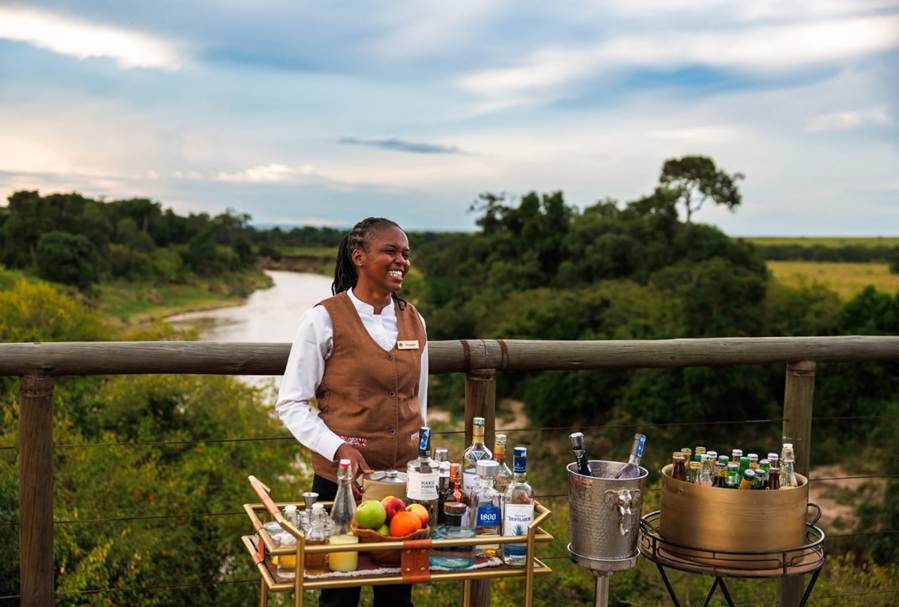
There is a specific quality to the light in Kenya in the hour before dusk. The gold deepens to amber, the shadows stretch long across the grass, and the air carries a warmth that feels almost personal. Your guide finds the right kopje a granite outcrop with an unbroken view across the plains and the camp team is already there, drinks poured, the Mara laid out below you. Nobody speaks for a while. Nobody needs to.
A great safari is not a list of animals seen. It is a collection of moments when the world reminded you of its scale and you felt, briefly and beautifully, exactly the right size within it.
How to Plan Your Kenya Safari — The Vard Africa Way:
We are going to be honest with you about the planning process, because we think honesty is the most useful thing we can offer.
A luxury Kenya safari, properly done, is not a complicated thing to plan but it is a precise one. The right combination of timing, destination, camp, and guide is what transforms a good trip into an extraordinary one. And those combinations are not obvious from the outside. They require current, ground-level knowledge that changes with the seasons, with conservation conditions, with the movements of specific wildlife populations.
This is precisely what Vard Africa exists to provide.
Step One — Begin with the question nobody asks:
Most guests begin their enquiry by asking about destinations or camps. We always begin one step earlier: we ask who you are as a traveller. Not what you want to see but how you want to feel. What does the ideal morning look like? What does the ideal evening look like? What do you need from this trip that your ordinary life is not giving you?
The answers to those questions build a more precise and personal itinerary than any camp shortlist ever could.
Step Two — Choose your timing with intention:
Kenya rewards every season with something extraordinary, but no two months are alike. We help you match your travel dates to the specific experience that speaks to you whether that is the drama of the migration, the intimacy of the low season, the newborn wildlife of the green months, or the clarity and stillness of the dry-season mornings.
Step Three — Trust someone who is actually there:
We say this not to promote ourselves but because it is simply true: the difference between an operator in London booking Kenya from a screen and a team in Nairobi with direct relationships on the ground is the difference between a well-organised trip and a genuinely life-changing one.
We know which guide at a specific camp had a leopard with cubs on his traversing area last week. We know that the northern section of a particular conservancy has been extraordinary this month. We know that the camp that looks perfect on paper has been having kitchen issues, and we have already taken it off our recommended list until we are satisfied it has been resolved.
Step Four — Leave space for the unexpected:
The most transformative moments on a Kenya safari are never the ones you planned for. They are the elephant herd that appears at the waterhole as you are heading back to camp. The night sky on a clear Mara evening that stops you mid-sentence. The way your guide says, very quietly, ‘don’t move’ and you understand, for the first time, what it means to be truly present somewhere.
What You Need to Know Before You Go:
Getting to Kenya:
Nairobi’s Jomo Kenyatta International Airport receives direct flights from London, Amsterdam, Dubai, Doha, and multiple African hubs. From Nairobi, the journey to your camp is via private charter bush flight a 40-minute experience over the Rift Valley that is itself among the most beautiful things you will do in Kenya. Wilson Airport, a smaller general aviation facility in Nairobi, is the departure point for most bush flights and we arrange every connection personally.
Visa and Entry Requirements:
Most international visitors require a Kenya Electronic Travel Authorisation (ETA), applied for online before departure. Vard Africa manages this process for all our guests as part of our full pre-arrival service. We also advise on any additional documentation required for Tanzania, Rwanda, or other East African destinations if your itinerary extends beyond Kenya.
Health and Wellbeing:
We recommend a consultation with your travel health physician at least six weeks before departure. Malaria prophylaxis is advised for most safari regions. Yellow fever vaccination may be required depending on your country of origin and routing. All our partner camps maintain the highest standards of hygiene and have access to emergency medical support and evacuation services.
The best time to visit:
The honest answer is that there is no bad time to visit Kenya only different Kenyas to visit at different times of year. We will help you find the one that is right for you specifically.
A Final Word:
Every safari we build at Vard Africa begins with a conversation and ends, weeks or months later, with a guest standing at an airport trying to find the words to describe what happened to them in the bush. They rarely fully succeed. Not because the experience was indescribable but because the person who went in is not quite the same as the person standing there now.
Kenya does this. Quietly, unhurriedly, without ceremony. It simply shows you a version of the world that is so vast and so indifferent to ordinary human concerns that something in you recalibrates permanently.
We would very much like to be the team that takes you there.

The Maasai have a word — sopa — a greeting that means, roughly, ‘I see you.’ After a week in the Mara, guests often tell us they finally understand what it feels like to be truly seen by a landscape, by a people, by a silence that has been here long before any of us and will be here long after.
| Tell us what you dream of and we will show you exactly how to make it real. ENQUIRE NOW |

